
You train hard. You show up early, chase new PRs, and plan your season around the next race, meet, or game. Then an injury or a stubborn plateau stops you cold, and suddenly you are handed a sheet of generic exercises and told to rest.
That is not good enough for someone with your goals. You do not just want the pain to go away. You want to get back to your sport and be stronger than you were before.
That is exactly what performance physical therapy in Mount Pleasant, SC is designed to do. At Apex Physical Therapy, we treat you like the athlete you are, with a plan built around your sport, your body, and your timeline.
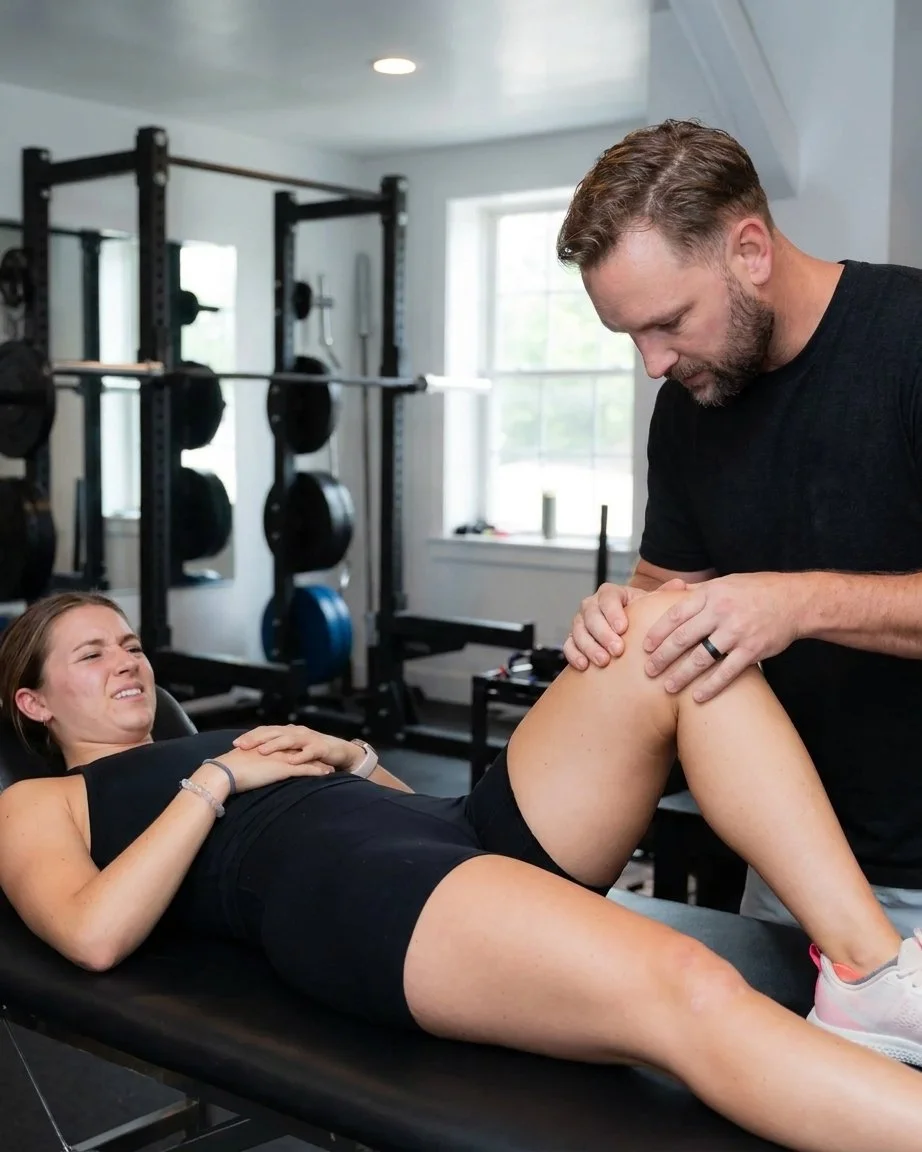
What Is Performance Physical Therapy?
Performance physical therapy blends traditional rehabilitation with the principles of strength and conditioning. Instead of stopping when your pain settles, the process continues until you can move, load, and compete at the level your sport demands.
Traditional rehab often asks one question: can you do daily activities without pain? Performance PT asks a bigger one: can you sprint, lift, jump, cut, or run long distances without breaking down?
How It Differs From Standard Rehab
Performance PT is built around a few core ideas:
Sport-specific goals. A marathoner, a CrossFitter, and a soccer player need different things from rehab, so the plan reflects that.
Progressive loading. Tissues get stronger when they are progressively challenged, so exercises are advanced with purpose.
Movement quality. Pain often traces back to how you move, not just where it hurts.
Data-driven decisions. Strength, symmetry, and movement are measured, not guessed.
The result is care that treats the injury and also addresses the weak links that may have contributed to it.
Why Standard Rehab Often Falls Short for Competitive Athletes
Many athletes in the Mount Pleasant and Charleston area tell us the same story. They completed physical therapy before, felt better for a while, and then the problem came back or they never felt truly ready to return to full training.
There are common reasons this happens:
Short, divided visits. When your therapist is splitting attention across several patients, you lose coaching time and hands-on care.
Generic programs. Standard exercise packets rarely reflect the speed, volume, and intensity of your sport.
Rest as the default. Being told to stop training can cost you fitness, momentum, and confidence.
No clear finish line. Without objective benchmarks, "I feel ready" becomes the only test.
If any of this sounds familiar, you are not being impatient. You are recognizing that your goals require a different level of care.
What Makes Apex Physical Therapy Different?
Apex Physical Therapy was built for athletes who want more than the minimum. Here is what sets the experience apart.
One-on-One Sessions With a Doctor of Physical Therapy
Every session is a full 60 minutes entirely with your treating therapist. There are no aides, no techs, and no double booking. You get hands-on treatment, real-time coaching, and program adjustments based on how your body responds that day.
Dual Board-Certified Expertise
Your clinician holds both an Orthopedic Clinical Specialist (OCS) credential and a Certified Strength and Conditioning Specialist (CSCS) credential. That combination matters. One reflects advanced knowledge of musculoskeletal injuries, and the other reflects expertise in building strength, power, and athletic capacity.
Experience With Elite Athletes
Our clinician has experience working with NFL, NBA, MLB, NCAA, and US Special Forces athletes. That background shapes how we think about progression, accountability, and what it really takes to return to high-level performance. You benefit from that mindset whether you compete professionally or train before work and race on weekends.
What Happens at Your First Visit?
Your first visit is not a quick intake. It is a full evaluation designed to find the real reasons behind your pain or plateau.
A Comprehensive Physical Assessment
We begin with a thorough physical assessment and functional movement screening. We examine mobility, stability, strength, movement patterns, and how your body handles the demands of your sport. We also review your training history, past injuries, and what you want to achieve.
Movement and Running Analysis
Depending on your goals, your evaluation may include a movement screen, a functional movement assessment, or a running form assessment and gait analysis. For runners and triathletes, this can reveal how your mechanics may be contributing to issues like runner's knee, IT band syndrome, shin splints, Achilles tendinopathy, or plantar fasciitis.
A Plan Built Around You
Because you work directly with a Doctor of Physical Therapy, you leave your first visit with clear answers. You will understand what is going on, what we are going to do about it, and what you can keep doing in the meantime. You can explore the full range of care on our Services page.
Active Recovery: Keep Training While You Heal
One of the hardest parts of an injury is feeling sidelined. At Apex Physical Therapy, we follow an active recovery philosophy. Unless there is a medical reason to stop, the goal is to keep you training in a modified way while the injured area heals.
That might mean:
Maintaining upper body strength while a lower body injury recovers
Using cross-training to protect your aerobic base
Adjusting volume, tempo, or range of motion rather than eliminating lifts entirely
Progressing from rehab exercises into full strength training as you improve
The Advantage of Training in a Real Gym Environment
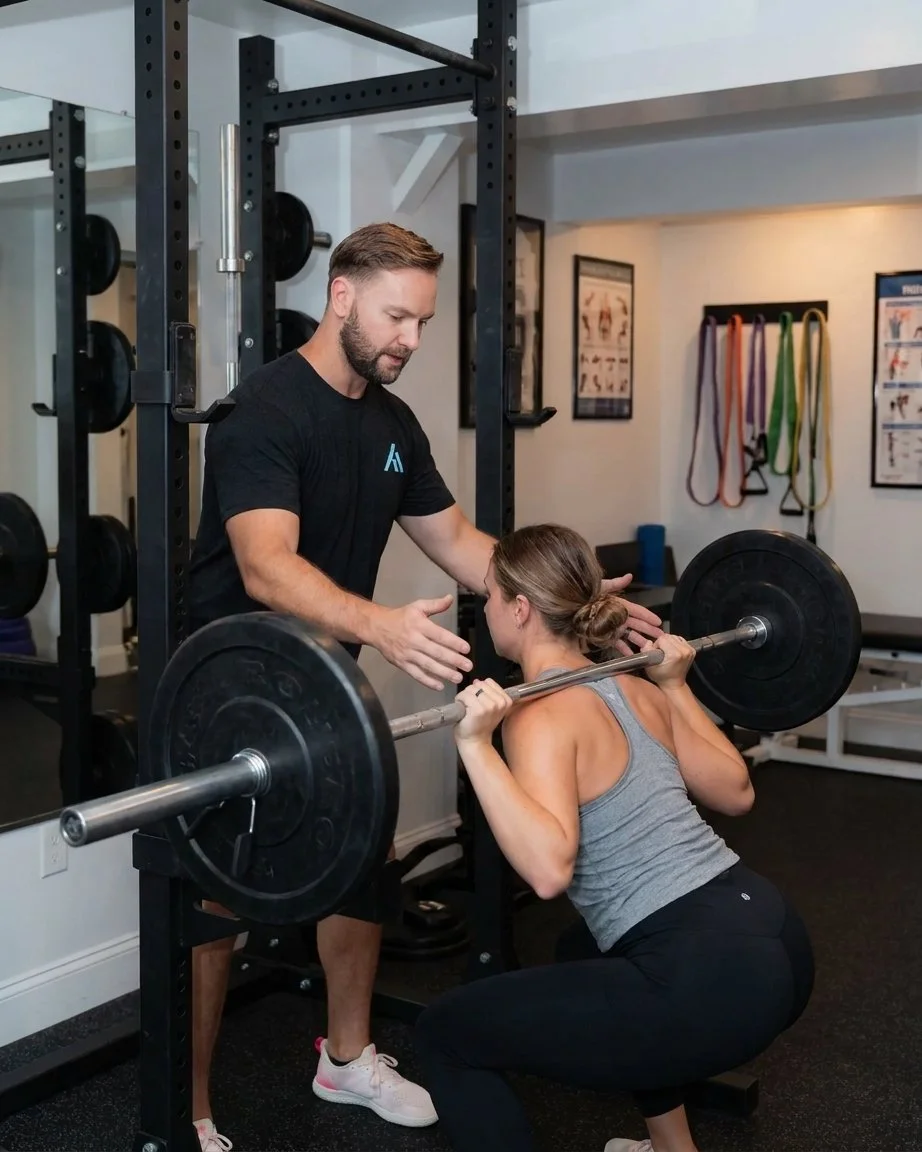
Apex Physical Therapy is located inside PWR Fitness, so you are rehabbing in a real training environment. Racks, barbells, sleds, and open space are all within reach. That makes the transition from rehab to full strength and conditioning seamless, without a gap between being discharged and getting back to the gym.
Advanced Tools That Support Your Recovery
Hands-on care and progressive training are the foundation, and certain tools can strengthen the plan when they fit your needs. Your therapist selects them based on your assessment, not a set routine.
Blood Flow Restriction (BFR) Training
Blood flow restriction (BFR) training uses a specialized cuff to partially limit blood flow while you exercise with lighter loads. Research shows low-load BFR training can help build muscle and strength when heavy loading is not yet possible, making it especially useful after surgery or during painful phases of recovery.
Dry Needling, IASTM, and Cupping
These techniques target soft tissue tension and movement restrictions:
Dry needling uses thin needles to address trigger points and may help reduce pain and improve mobility in the short term.
IASTM (Graston-style tools) uses specialized instruments to mobilize soft tissue and address restricted areas.
Cupping uses suction to influence soft tissue and can be a useful addition to a broader treatment plan.
We also offer manual therapy, myofascial release, joint mobilization, taping, and acupuncture when they support your goals.
Advanced Strength and Power Training Methods
French Contrast, Conjugate, and TriPhasic methods are advanced approaches used in athletic performance training. French Contrast pairs heavy lifts with plyometrics and assisted speed work to build power. Conjugate and TriPhasic methods organize training to develop different qualities like maximal strength, speed, and the ability to absorb and produce force. Used appropriately, they help bridge the gap between rehab and sport.
How Do You Know You Are Ready to Return to Sport?
Feeling ready is not the same as being ready. Research on injuries like ACL tears shows that returning to sport before meeting strength and functional benchmarks is linked to a higher risk of reinjury. That is why objective testing matters.
Isokinetic and Dynamometer Testing
Apex Physical Therapy uses isokinetic and dynamometer testing to measure how much force your muscles can produce. These tools help compare your injured and uninjured sides and identify strength deficits that are easy to miss by eye or by feel.
Return-to-Sport Testing
Our return-to-sport testing combines strength data with functional tasks like hopping, jumping, change of direction, and sport-specific movements. Many return-to-sport criteria look for strength and performance on the injured side to be within approximately 90 percent of the uninjured side, along with good movement quality and confidence. Clear benchmarks give you and your therapist far better information than a calendar date alone.
Plyometric and Return-to-Sport Progressions
Before you return to competition, we progress you through plyometrics, neuromuscular re-education, balance and proprioception training, and sport-specific drills. The goal is to expose your body to the speed and demands of your sport in a controlled way first.
Who Benefits From Performance Physical Therapy?
You do not need to be a professional athlete to benefit. Performance PT is a strong fit for active adults who care about training, competing, and staying healthy long term.
Common Athletes We Work With
Runners and triathletes dealing with overuse injuries or looking to improve mechanics
CrossFitters and strength athletes with shoulder, hip, knee, or low back pain
Team sport athletes recovering from sprains, strains, or ACL injuries
Weekend warriors who want to keep playing without constant setbacks
Conditions We Treat
Our clinician treats a wide range of orthopedic and sports injuries, including:
Low back pain, sciatica, and neck pain
Rotator cuff injuries, shoulder impingement, and tennis or golfer's elbow
Hip impingement, labral tears, and groin pain
Runner's knee, meniscus injuries, ACL injuries, and hamstring strains
Achilles tendinopathy, plantar fasciitis, ankle sprains, and shin splints
Concussion symptoms, headaches, and vertigo or BPPV, addressed through vestibular therapy and Dix-Hallpike positional testing
Beyond Rehab: Prehab and Prevention
You do not have to be injured to get started. Preseason prehab, injury prevention work, mobility and strength building, and performance training can help you identify weak links before they sideline you. Learn more about our approach on the About page.
Getting Started Is Simple
South Carolina allows direct access, so you do not need a physician referral to begin physical therapy. You can book when you are ready, rather than waiting on an appointment just to get permission to start.
Apex Physical Therapy operates on a cash-pay, out-of-network model. That means your care is shaped by your goals and what your body needs, not by visit limits set by a third party.
Ready to Come Back Stronger?
If you are tired of passive rehab and want a plan that respects how hard you train, Apex Physical Therapy is ready to help. You will get a full 60 minutes with a Doctor of Physical Therapy, a thorough assessment, and a plan that keeps you moving toward your goals.
Do not wait for a small problem to become a season-ending one. Visit apex-chs.com to book your first session and get back to the sport you love, stronger than before.
