
How Long Does Performance Physical Therapy in Mount Pleasant Take to Work?
For athletes and active individuals in Mount Pleasant, SC, one question comes up more than any other: "How long will this take?" Whether you are training for a race, recovering from a sports injury, or working to get back to the activities you love, the timeline matters. You want results, and you want a clear path to get there.
While no single answer fits every person, Apex Physical Therapy takes a structured, phase-based approach to performance physical therapy designed to move you forward efficiently and safely. The goal is not just pain relief. It is comprehensive recovery, resilient tissue, and a return to sport or activity at a higher level than before.
What Separates Symptom Relief from True Recovery
Understanding the difference between feeling better and being fully recovered is essential. Pain can decrease quickly with the right interventions, but lasting tissue remodeling, strength adaptation, and neuromuscular reprogramming take consistent, structured work over weeks to months.
Rushing this process increases re-injury risk. A phased approach ensures each stage builds on the last, giving your body the time and stimulus it needs to adapt fully.
Starting with a Thorough Assessment
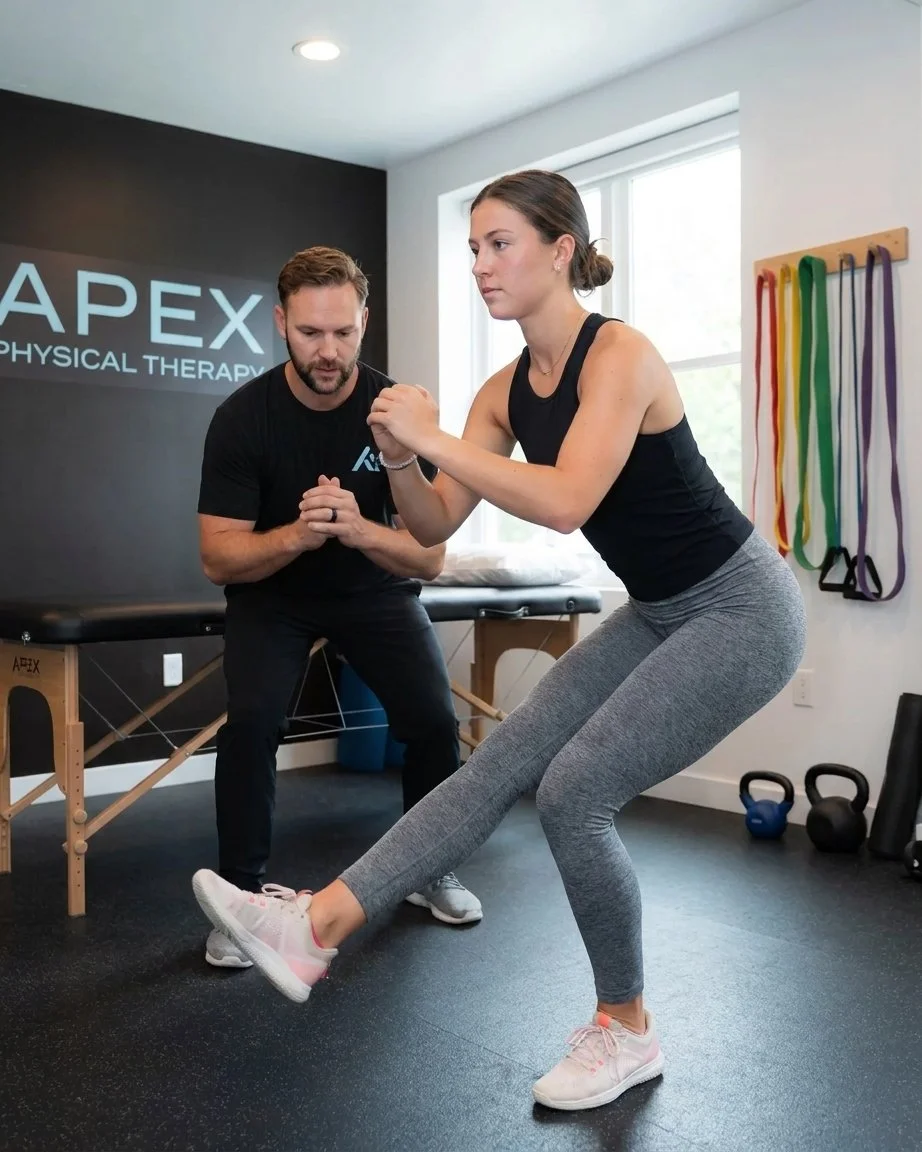
Every plan at Apex Physical Therapy begins with a detailed evaluation. This includes a functional movement assessment and movement screen to examine your entire kinetic chain, not just the site of pain. Strength imbalances, mobility restrictions, movement compensations, and injury history are all factored in.
This level of detail allows your therapist to identify root causes rather than surface symptoms, creating a personalized roadmap that targets the right deficiencies from the start.
Phase One: Immediate Relief and Restoring Movement
The first phase focuses on reducing pain, decreasing tissue tension, and restoring basic mobility. Several hands-on treatments are used during this stage.
Dry needling targets myofascial trigger points to reduce muscle tension, improve circulation, and decrease pain. Many patients notice meaningful improvements in mobility and comfort within the first few sessions, creating a better environment for active rehabilitation.
Cupping decompresses fascial tissue, promotes circulation, and reduces stiffness. This can improve flexibility and movement quality relatively quickly. Joint mobilization and manipulation restore normal joint mechanics, reduce stiffness, and improve range of motion by addressing restrictions that contribute to pain and inefficient movement.
Other tools used during this phase include:
Soft tissue mobilization
Myofascial release
Trigger point therapy
IASTM / Graston technique
Taping (KT / athletic taping)
These early wins build confidence and set the foundation for the work ahead.
Phase Two: Building Strength and Tissue Resilience
Once pain is managed and basic mobility is restored, the focus shifts to rebuilding strength and preparing tissue for higher demands. This phase is where meaningful, lasting change happens.
Blood flow restriction (BFR) training is particularly valuable here. It allows for significant strength and muscle gains using lighter loads, which reduces stress on healing tissue. This means strength work can begin earlier and more safely, preventing atrophy and accelerating the return to full capacity.
Therapeutic exercise progressions are carefully designed to mirror the demands of your sport or daily activities. The loading is managed deliberately to stimulate adaptation without overstressing recovering tissue.
Additional treatments used during this phase may include:
Neuromuscular re-education
Balance and proprioception training
Plyometrics and return-to-sport progressions
Electrical stimulation (TENS/NMES)
Assisted stretching
Breathwork and diaphragmatic training
The objective at this stage is not just to restore pre-injury function. It is to identify and correct pre-existing weaknesses so you come back more resilient than before.
Phase Three: Return-to-Sport Testing and Peak Readiness
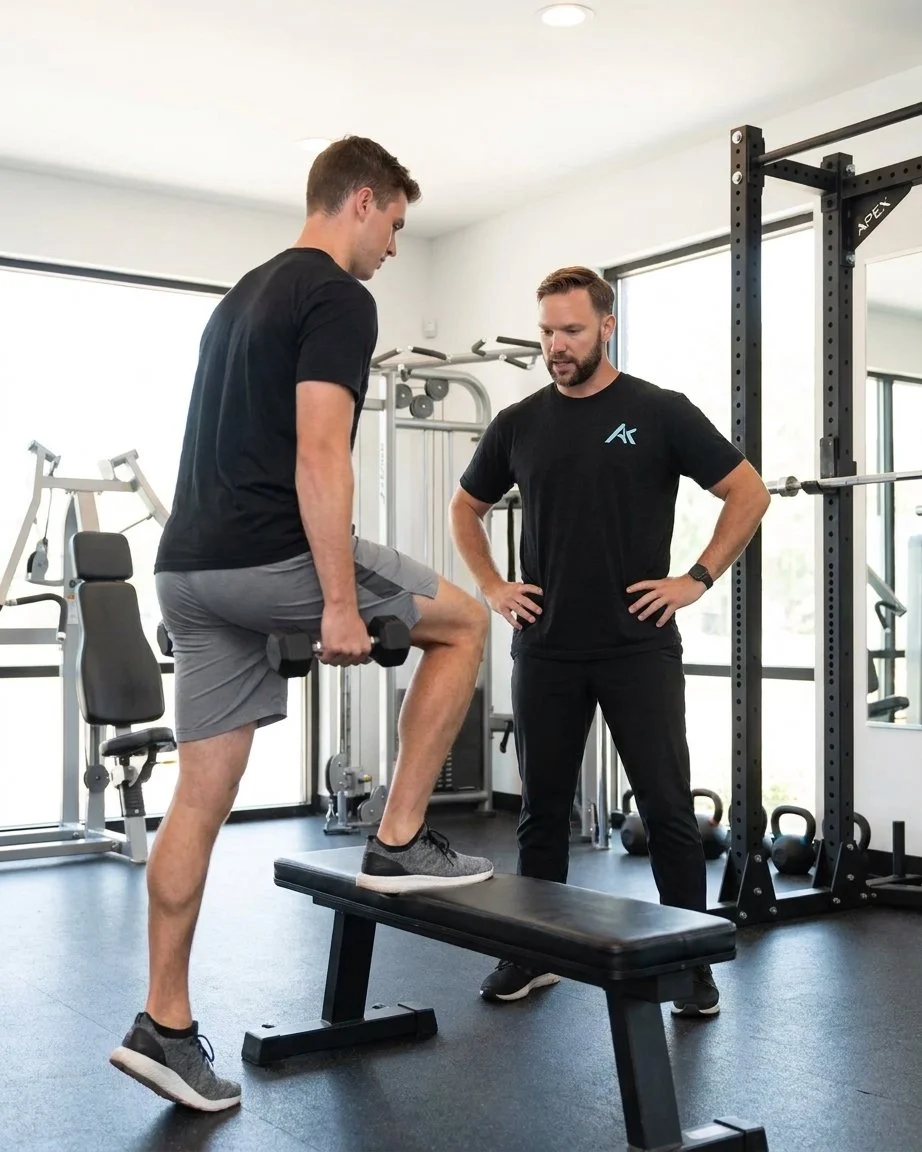
Before returning to full competition or high-intensity activity, objective testing confirms that your body is genuinely ready. This is not based on how you feel alone. It is based on measurable performance data.
Return-to-sport testing at Apex Physical Therapy may include:
Isokinetic and dynamometer testing to measure strength and power output
Running gait analysis and running form assessment for athletes returning to running
Functional movement reassessment to compare against baseline
Sport-specific movement and agility benchmarks
Your results are compared against your initial assessment, your uninjured side, or normative data for your sport and age group. This ensures you are not just symptom-free but performing at or above the level required for safe return.
For runners specifically, arunning gait analysiscan identify mechanical inefficiencies that may have contributed to the original injury, allowing those patterns to be corrected before full training resumes.
What to Expect Across the Full Timeline
Timelines vary based on the nature and severity of the injury, your baseline fitness, and how consistently you engage with the program. That said, a general framework looks like this:
Weeks one through two: Pain reduction, improved mobility, tissue preparation
Weeks three through six: Strength rebuilding, movement retraining, progressive loading
Weeks six through twelve and beyond: Sport-specific conditioning, return-to-sport testing, performance optimization
Some conditions resolve more quickly. Others, such as ACL injuries, rotator cuff tears, or post-surgical rehabilitation, require longer timelines. Your therapist will set clear benchmarks at each phase so you always know where you stand and what comes next.
Why the Approach at Apex Physical Therapy Moves You Forward Faster
The structure of care at Apex Physical Therapy is built around maximizing the quality and consistency of each session. One-on-one time with your physical therapist means every visit is focused, purposeful, and directly tied to your goals.
This approach supports outcomes across a wide range of performance goals, including:
Return to sport after injury
Return to running following lower extremity issues
Injury prevention through prehabilitation and movement correction
Strength building and mobility improvement
Pain management for chronic or overuse conditions
If you are ready to stop guessing and start progressing, contact Apex Physical Therapy in Mount Pleasant, SC to schedule your initial assessment and get a clear, personalized plan for your recovery.
